


Implant Crowns in Sewell, NJ
Custom Implant Crowns Designed for Fit, Bite, and Natural Appearance

An implant crown is the custom tooth-shaped restoration that attaches to a dental implant. It is the part of the implant restoration you see, feel, and use every day when you smile, speak, and chew.
At Sewell Dental Arts, implant crowns are planned with care. Dr. Septimiu Pastiu considers the position of the implant, the shape of your gums, the way your teeth come together, and the appearance of your smile.
The goal is not just to fill a space. The goal is to create an implant crown that feels stable, blends naturally, and supports long-term function.
If you need a final crown for a dental implant, or if an existing implant crown feels loose, worn, or uncomfortable, schedule a consultation with Sewell Dental Arts in Sewell, NJ.
What Is an Implant Crown?

An implant crown is the visible replacement tooth attached to a dental implant.
Unlike a regular dental crown, it does not cover a natural tooth. Instead, it connects to an implant that has been placed in the jawbone. In most cases, the implant crown is supported by a small connector called an abutment.
An implant crown may be used when:
- You are replacing one missing tooth
- Your implant has healed and is ready for the final crown
- An older implant crown needs repair or replacement
- A crown on an implant feels loose, bulky, worn, or unnatural
The implant itself provides the foundation. The implant crown completes the visible tooth.
Because the crown affects your bite, appearance, and daily comfort, it should be designed carefully.
Implant Crown vs. Dental Crown

A regular dental crown and an implant crown may look similar in the mouth. However, they are used in different ways.
A regular dental crown covers a natural tooth. It is often used when a tooth is cracked, worn, weakened, or restored after a root canal.
An implant crown attaches to a dental implant. The implant replaces the missing tooth root. The crown completes the visible part of the tooth.
In simple terms:
- A dental crown covers a natural tooth.
- A dental implant replaces a missing tooth root.
- An implant crown attaches to the implant.
- The implant crown is the final visible tooth.
If you are learning about replacing one missing tooth from root to crown, you may also want to read about single tooth dental implants.
The Three Parts of an Implant Restoration

A single implant restoration usually has three main parts.
1. Implant Post
The implant post is placed in the jawbone. It acts like an artificial tooth root.
After placement, the surrounding bone usually needs time to heal around the implant. This healing period helps create a stable foundation for the final restoration.
2. Abutment or Connector
The abutment is the small connector between the implant and the crown.
It helps support the final implant crown. It also helps create the right shape where the crown meets the gumline.
3. Final Implant Crown
The final implant crown is the custom tooth that attaches to the implant system.
This is the part you see when you smile. It is also the part that helps you chew, speak, and maintain a balanced bite.
At Sewell Dental Arts, the crown is designed with attention to shape, shade, fit, bite, and comfort.
When You May Need an Implant Crown
You may need an implant crown if you have a missing tooth or an implant that is ready to be restored.
You may also need care for an existing implant crown that no longer feels right.
Common reasons patients visit Sewell Dental Arts for implant crowns include:
- One missing tooth
- A tooth that cannot be saved and may need implant replacement
- A healed implant that is ready for its final crown
- A damaged or worn old implant crown
- A loose or uncomfortable implant crown
- An implant crown that does not look natural
- Bite discomfort around an implant crown
- Food trapping around an implant restoration
- A chipped or cracked implant crown
- Changes in the way the implant crown feels when chewing
Not every concern means the implant itself has failed. Sometimes the crown, abutment, screw, bite, or surrounding gum tissue needs evaluation.
Dr. Pastiu will examine the area and explain what may be needed.
How the Implant Crown Process Works at Sewell Dental Arts

The implant crown process depends on your starting point.
Some patients still need the dental implant placed. Others already have a healed implant and only need the final crown restored. Some patients visit because an older implant crown needs replacement.
At Sewell Dental Arts, the process is planned around your mouth, bite, and long-term comfort.
1. Consultation and Examination
Your visit begins with a careful exam.
Dr. Pastiu will evaluate your implant area, gum tissue, bite, neighboring teeth, and overall oral health. He will also listen to your concerns and goals.
If you already have an implant, he will check whether it is ready for restoration.
2. Digital Planning and Evaluation
Planning helps determine how the final crown should fit and function.
This may include digital imaging, bite evaluation, photographs, scans, or other diagnostic steps. The goal is to understand the implant position and how the crown should relate to the surrounding teeth.
A well-designed implant crown begins before the crown is made.
3. Implant Readiness Check
If the implant has already been placed, Dr. Pastiu will evaluate whether it is ready for the crown.
The implant usually needs to be stable before the final crown is attached. If healing is still needed, the timeline may be adjusted.
If the implant has not been placed yet, Dr. Pastiu will explain the steps involved before the crown can be made.
4. Abutment or Connector Planning
The abutment helps connect the crown to the implant.
Its shape and position can affect gumline appearance, support, and cleanability. For this reason, abutment planning is an important part of the final result.
5. Digital Scan or Impression
Once the implant is ready, a digital scan or impression is taken.
This helps capture the shape of your mouth, surrounding teeth, implant position, and bite relationship. These details guide the design of the implant crown.
6. Crown Design With Attention to Shape, Shade, Bite, and Gumline
The implant crown is designed to fit your mouth.
Dr. Pastiu considers:
- Tooth shape
- Tooth color
- Bite contact
- Gumline contour
- Space between neighboring teeth
- Chewing forces
- Cleanability
- Natural appearance
Sewell Dental Arts’ private in-house dental lab helps support this level of detail. The crown can be planned with close attention to fit, form, and function.
7. Final Placement and Bite Adjustment
When the crown is ready, it is attached to the implant system.
Dr. Pastiu checks how it feels, how it fits, and how your teeth come together. Small bite adjustments may be needed to improve comfort and reduce excess pressure.
The crown should not feel bulky or distracting.
8. Maintenance Guidance
After placement, you will receive instructions for cleaning and maintenance.
Implant crowns need regular home care and dental checkups. Even though an implant crown cannot get a cavity, the gums and surrounding tissues still need to stay healthy.
How Is an Implant Crown Attached?
An implant crown may be attached in different ways. The two common options are screw-retained and cement-retained implant crowns. Neither option is always better for every patient. The right choice depends on the implant position, tooth location, bite, appearance, access, and treatment plan.
Screw-Retained Implant Crowns
A screw-retained implant crown is attached with a small screw. This type of crown may be easier to remove if future repair, maintenance, or replacement is needed. After the screw is tightened, the access opening is usually sealed with tooth-colored material. This option may be useful when retrievability is important.
Cement-Retained Implant Crowns
A cement-retained implant crown is attached to the abutment with dental cement. This option may be considered when appearance, implant angle, or crown position makes a screw access opening less ideal. Cement-retained crowns must be placed carefully. Excess cement around an implant can irritate the surrounding tissue, so precision matters.
Choosing the Right Attachment Method
Dr. Pastiu will recommend the attachment method based on your specific case. He will consider the implant location, gumline, bite forces, neighboring teeth, and how the crown should look and function. The goal is to create a stable restoration that can be cleaned, maintained, and used comfortably.
Why the Final Crown Matters
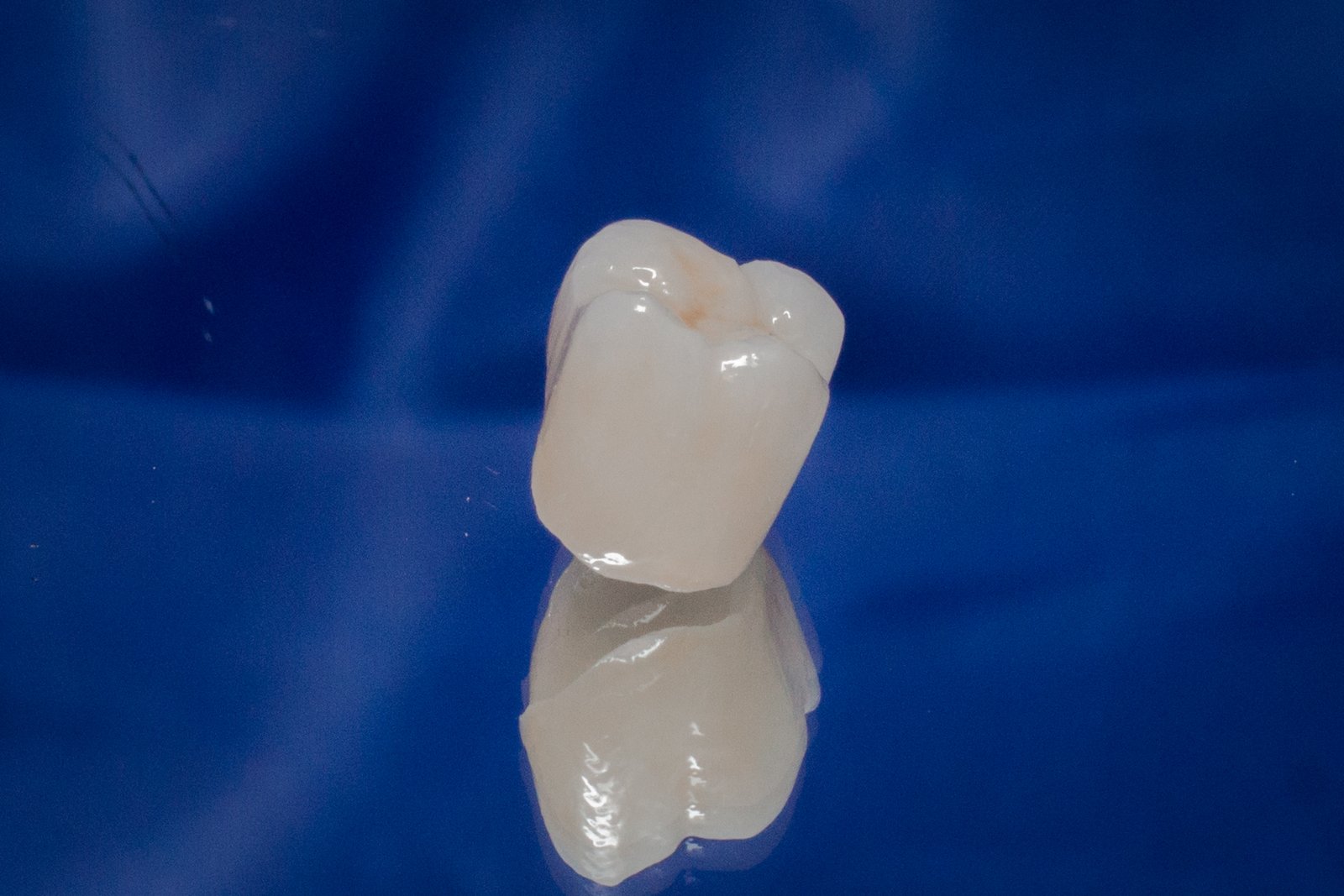
The dental implant provides the foundation. The final crown determines how the tooth looks, feels, and functions in everyday life.
A carefully designed implant crown can support:
- Chewing comfort
- Bite balance
- Clear speech
- Smile appearance
- Gumline contour
- Cleanability
- Long-term function
- A more natural feel in the mouth
A poorly fitted crown may feel high, bulky, uneven, or difficult to clean. It may also place extra pressure on the implant, neighboring teeth, or bite.
That is why the final crown should not be treated as an afterthought.
At Sewell Dental Arts, implant crowns are planned as part of the full restorative result.
Implant Crown Materials

Implant crowns can be made from different dental materials. The right material depends on the tooth location, bite forces, appearance goals, and clinical needs.
Zirconia Implant Crowns
Zirconia is often used for implant restorations because it is strong and can be designed for a natural appearance.
It may be recommended in areas that need durability, especially where chewing forces are higher.
Ceramic or Porcelain Implant Crowns
Ceramic and porcelain materials may be used when appearance is especially important.
These materials can help create lifelike shade and translucency in the right situation. They may be considered for visible areas of the smile.
Choosing the Right Material
No single material is best for every patient.
Dr. Pastiu will evaluate your bite, implant position, smile line, gum tissue, and functional needs. Then he will recommend a material that fits your treatment plan.
The goal is to balance strength, appearance, and long-term comfort.
Replacing or Repairing an Existing Implant Crown
An implant crown can sometimes need attention over time. The crown may wear, chip, loosen, crack, or stop matching the surrounding teeth. In some cases, the implant itself may still be stable, but the crown or abutment needs evaluation.
You should schedule an exam if you notice:
- Looseness around an implant crown
- A clicking feeling when chewing
- Bite changes
- Discomfort or pressure
- A chipped or cracked crown
- Food trapping around the crown
- Gum irritation near the implant
- A crown that looks bulky or unnatural
- Difficulty cleaning around the restoration
Do not ignore changes around an implant crown. Early evaluation may help prevent larger issues. Dr. Pastiu can examine the implant, abutment, crown, bite, and surrounding tissue to determine the next step.
Why Choose Sewell Dental Arts for Implant Crowns?

Implant crowns require more than a good-looking tooth. They require careful restorative planning.
At Sewell Dental Arts, your implant crown is planned with attention to fit, function, comfort, and appearance.
Patients choose Sewell Dental Arts because the practice offers:
- A 100% privately owned dental setting
- Direct involvement from Dr. Septimiu Pastiu
- A private in-house dental lab
- Custom shape, shade, fit, and bite refinement
- Restorative precision
- Careful planning instead of rushed treatment
- Experience with implant crowns, implant bridges, zirconia restorations, and full-arch treatment
- A convenient Sewell, NJ location
The in-house dental lab is an important advantage. It allows the practice to focus closely on the details of the final restoration, including the contour, bite, shade, and fit.
Dr. Pastiu understands that the final crown is what patients live with every day. It should feel comfortable, look natural, and support long-term function.
Related Implant Options
Implant crowns are one part of a larger dental implant treatment family. Depending on your needs, Dr. Pastiu may discuss related options.
Single Tooth Dental Implants
Single tooth dental implants may be recommended when one missing tooth needs to be replaced from root to crown.
Implant Bridges
Implant bridges may be used when several missing teeth are in the same area.
Zirconia Implant Bridges
Zirconia implant bridges may be used for larger fixed implant restorations that need strength and natural-looking design.
Full-Arch Dental Implants
Full-arch dental implants may be considered when most or all teeth in an upper or lower arch need replacement.
All-on-4 Dental Implants
All-on-4 dental implants may be used for full-arch treatment with strategically placed implants.
Full Mouth Reconstruction
Full mouth reconstruction may be recommended for complex cases involving many teeth, bite issues, missing teeth, or worn dental work.
Serving Sewell and Nearby Communities

Sewell Dental Arts provides implant crown consultations in Sewell, NJ.
The office is located at:
400 Ganttown Road
Sewell, NJ 08080
Patients visit from Sewell, Washington Township, Turnersville, Mantua, Deptford, Glassboro, Pitman, Mullica Hill, and nearby communities throughout Gloucester County.
To schedule a consultation, call Sewell Dental Arts at (856) 582-2220.
Schedule an Implant Crown Consultation in Sewell, NJ
If you need an implant crown, have a healed implant ready for restoration, or are concerned about an existing implant crown, Sewell Dental Arts can help you understand your options.
Dr. Pastiu will evaluate your implant, bite, gum tissue, and final restoration needs. Then he will explain what is appropriate for your situation.
Call Sewell Dental Arts at (856) 582-2220 or fill up the form to schedule an implant crown consultation in Sewell, NJ.
FAQ
What is an implant crown?
An implant crown is the visible replacement tooth attached to a dental implant. It is usually connected to the implant through an abutment or connector.
The implant replaces the missing tooth root. The crown completes the tooth above the gumline.
Is an implant crown different from a regular dental crown?
Yes. A regular dental crown covers a natural tooth. An implant crown attaches to a dental implant.
Both may look like teeth, but they are supported in different ways.
How is an implant crown attached?
An implant crown is usually attached with either a screw-retained or cement-retained design.
A screw-retained crown is secured with a small screw. A cement-retained crown is attached to an abutment with dental cement.
The best option depends on your implant position, bite, tooth location, appearance needs, and treatment plan.
Is a screw-retained or cement-retained implant crown better?
One is not always better than the other.
Screw-retained crowns may be easier to remove for future maintenance. Cement-retained crowns may be useful in certain cosmetic or positional situations.
Dr. Pastiu will recommend the option that fits your case.
How long after implant placement do I get the crown?
The timeline varies.
Many implants need time to heal before the final crown is attached. This healing period helps the implant become stable in the jawbone.
If your implant has already healed, the crown process may be shorter. Dr. Pastiu will explain your timeline after evaluating the implant.
What if my implant is already healed?
If your implant is already healed, Dr. Pastiu can evaluate whether it is ready for the final crown.
He may check the implant stability, gum tissue, bite, spacing, and abutment needs before designing the crown.
Can an implant crown be replaced?
Yes. An implant crown can often be replaced if it becomes worn, chipped, loose, cracked, uncomfortable, or outdated.
In some cases, the implant itself may still be stable. The crown, abutment, screw, or bite may need attention.
How long do implant crowns last?
The lifespan of an implant crown varies.
It depends on the crown material, bite forces, oral hygiene, grinding habits, gum health, and regular dental care. Some implant crowns last many years, but they may eventually need repair or replacement.
Regular checkups help monitor the crown and surrounding tissues.
What material is best for an implant crown?
The best material depends on your needs.
Zirconia may be used when strength is important. Ceramic or porcelain materials may be considered when appearance is a priority.
Dr. Pastiu will consider your bite, implant position, tooth location, smile line, and appearance goals before recommending a material.
Does an implant crown hurt?
The crown placement itself is usually not the same as implant surgery.
If the implant is already healed, placing the crown is often a straightforward restorative appointment. However, every case is different.
If additional treatment is needed, Dr. Pastiu will explain what to expect before care begins.
How do I clean an implant crown?
You should brush and floss around an implant crown as directed by your dental team.
Special floss, interdental brushes, or water flossers may be recommended in some cases.
Keeping the gum tissue healthy around the implant is important.
Routine dental visits also help monitor the implant crown and surrounding tissues.
How much does an implant crown cost in Sewell, NJ?
The cost of an implant crown depends on several factors.
These may include the condition of the implant, the type of abutment, crown material, imaging needs, lab design, and whether any repair or replacement work is needed.
Sewell Dental Arts can provide a personalized estimate after an examination.
Hours
Mon | 8:00 AM - 3:00 PM
Tues | 8:00 AM - 5:00 PM
Weds | 8:00 AM - 5:00 PM
Thurs | 8:00 AM - 5:00 PM
Fri | Closed
Sat | Closed
Sun | Closed
Contact
Sewell Dental Arts
Address: 400 Ganttown Road, Sewell, NJ, 08080
Primary Phone: (856) 442-4827
Phone: (856) 582-2220
Email: info@sewelldentalarts.com